Where Does ChatGPT Get Its Information?
Where does ChatGPT get its information? A 2026 breakdown of its training data, knowledge cutoff, live web search, and where LLMs really pull answers from.
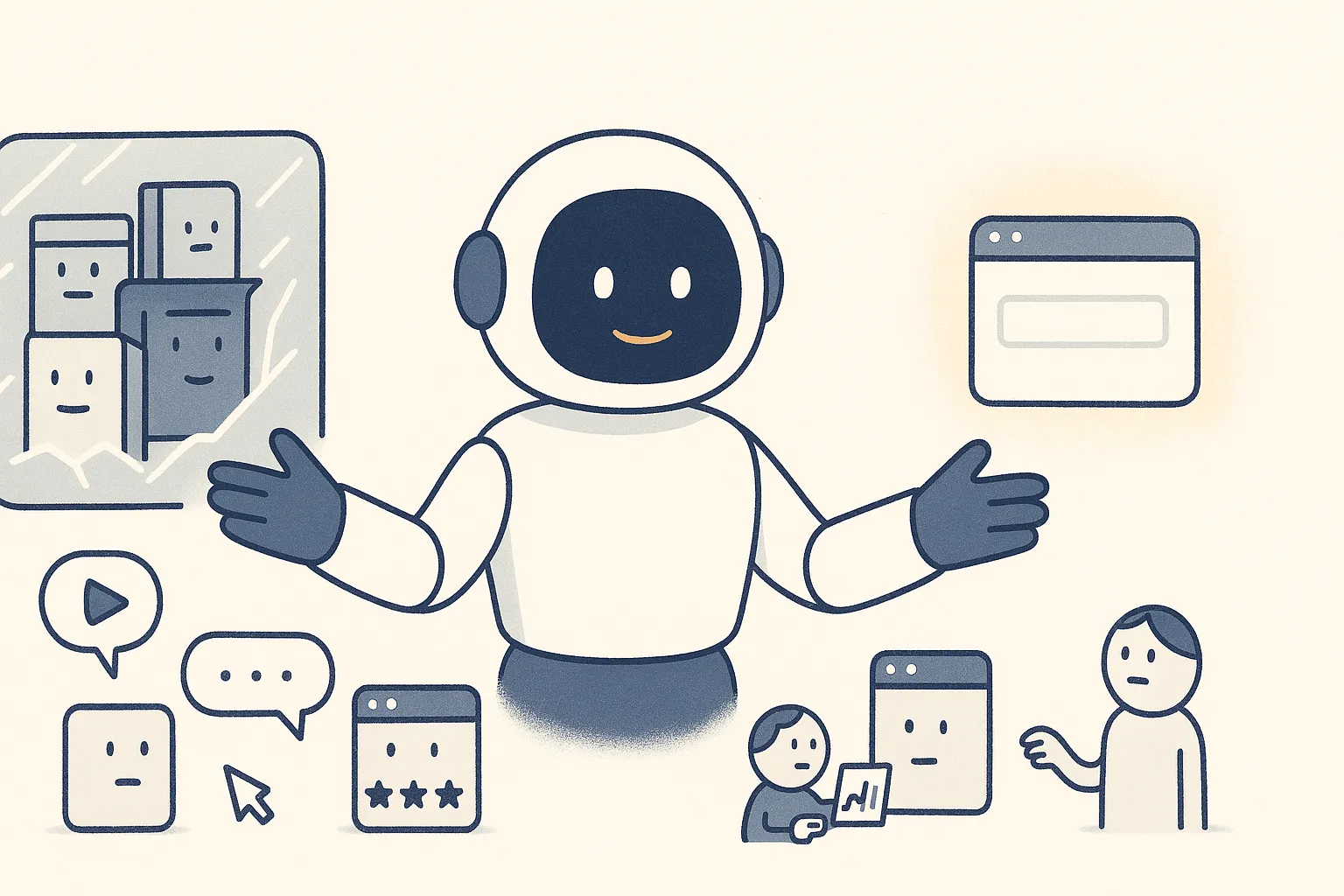
ChatGPT gets its information from two places: training and live search
Ask where does ChatGPT get its information, or where does ChatGPT get its data, and the honest answer is that it comes from two places that work nothing alike. Most of what it knows came from an enormous batch of text it was trained on once, then frozen in place. The rest, when you have search switched on, it goes and fetches from the live web in the moment you ask. That is the whole thing. Everything below is those two layers and, more usefully, what they mean if you are trying to get your brand into the answer.
The distinction matters because people ask the question expecting one answer and there are two. “Trained on the internet” and “reads the internet right now” are not the same claim, and confusing them is how you end up trusting a confident answer about something that happened last week.
Mapping and influencing those sources for your category is the core of my LLM SEO services.
What ChatGPT is trained on, and why it has a knowledge cutoff
The training corpus is the big one, the source of most of what ChatGPT can say without looking anything up. It is assembled from four buckets: a broad crawl of the public web (the Common Crawl dataset and similar), licensed data bought through deals, digitized books, and code. Reference-grade sources like Wikipedia are weighted heavily because they are clean and structured.
The licensing piece is the part most people miss, and it is public. OpenAI has signed content deals with Reddit and with a long list of publishers, the Associated Press, Axel Springer, News Corp, the Financial Times, Condé Nast, and others, to train on and surface their material. So “who gives ChatGPT information” is partly answered by a contract. Some of the internet was crawled for free, and some of it was paid for.
Here is the catch, and it answers a question people search constantly. That corpus is a snapshot. It was collected up to a fixed date, the knowledge cutoff, and then frozen. Ask ChatGPT about anything after its cutoff and, with no browsing, it cannot know. It will often answer anyway, confidently, which is exactly the failure mode to watch for. The training data is why ChatGPT sounds like it knows everything. The cutoff is why it is sometimes wrong about the recent past and does not flinch.
When ChatGPT searches the web, it uses Bing
Second layer. When search is on, ChatGPT does not rely on the frozen corpus. It retrieves live results from the web, reads them, and writes an answer grounded in what it just pulled. This is how it answers questions about today.
One detail trips people up: it is not Google. ChatGPT’s live search runs on Bing’s index and a set of third-party search providers, because of the Microsoft partnership behind it. So when someone asks whether ChatGPT gets its information from Google, the answer is no. It sees a Bing-shaped view of the web, which sometimes surfaces different pages than a Google search for the same query would.
Training data tells you what ChatGPT remembers. Live search tells you what it can look up. If you want to influence the answer, you have to win in both.
The two layers behave so differently that it is worth seeing them side by side, because the way you influence each one is not the same:
| Training data | Live web search | |
|---|---|---|
| What it is | A frozen snapshot the model was trained on | Pages fetched at the moment you ask |
| Freshness | Stops at the knowledge cutoff | Real-time, current |
| Where it comes from | Web crawl, licensed deals, books, code | Bing’s index and third-party providers |
| Does it cite a source | No, it answers from memory | Yes, when search is on it links what it read |
| How you get into it | Be in the corpus: Wikipedia, licensed publishers, and content referenced widely enough to be learned | Rank in Bing and get named on the third-party sources it retrieves |
The practical takeaway is in the last row. You cannot edit the training snapshot after the fact, so the only training-data lever is being cited so widely that the next model learns you. Live search you can influence now, this quarter, by earning the sources it pulls.
Where LLMs actually pull their answers from
This is the part that matters for anyone doing marketing, and it is where the generic explainers stop. Knowing which ChatGPT sources actually get pulled into an answer is the difference between guessing and targeting, so I pulled the real numbers. I track which domains get cited in AI answers across the prompts that matter for six B2B SaaS accounts I run, spanning cybersecurity, legal, HR tech, observability, marketing tech, and creator tools.
The first surprise is how little any single source matters. Those answers were assembled from more than 76,000 distinct domains, and the most-cited platform of them all, YouTube, accounts for just 2.7% of citations on average. The top ten sources combined are under 12%. There is no one page to win here. The answer is stitched together from a very long tail.
The second surprise is how consistent the top of that tail is. Strip out the industry-specific sites and the same recognizable platforms show up in every one of the six verticals:
| Platform | What it is | Avg share of a brand’s citations |
|---|---|---|
| YouTube | Video: how-tos, demos, reviews | 2.7% |
| Community threads and opinions | 2.5% | |
| Professional social | 1.0% | |
| G2, Capterra, GetApp, TrustRadius | Software review directories | ~0.6% each |
| Gartner | Analyst coverage | 0.6% |
| Microsoft, IBM | Big-tech docs and thought leadership | ~0.5% each |
| Medium, Forbes, TechRadar | Editorial and trade press | ~0.4% each |
| Wikipedia | Reference | in all six |
Video, community, review directories, analysts, reference. That is the independent layer AI reaches for first, and it is remarkably stable across industries a buyer would swear have nothing in common.
Then it gets uncomfortable. Your competitors’ own sites usually out-cite yours. In the legal account, three competitor platforms each individually beat the client’s own domain as a source. In cybersecurity, the two largest competitors did, and the brand’s own site limped in ninth. Even in the one vertical where the brand was the single most-cited domain about itself, that was still only 4% of the picture. The other 96% was everyone else.
The AI is building the answer about your category more from your competitors’ sites and a handful of review platforms than from anything you have ever published.
And the long tail is not all quality. The same auto-generated “statistics” sites, the kind that spin up a page of invented percentages for any topic you name, showed up as cited sources across all six industries. The models are pulling from junk right next to Gartner. Read that as a warning or an opening, depending on how cynical you are.
Which is the whole problem in a line: you can be crawled, cited, and still absent from the recommendation, a separate issue I have written about in AI citations are a vanity metric.
What this means for B2B SaaS
Put the two layers together and the playbook writes itself. You cannot edit ChatGPT’s training data, and you do not control Bing’s index. What you can control is whether the sources those systems trust already name you.
For B2B SaaS that reframes the whole job. Polishing your own product pages helps you get retrieved, but the answer to “best project management tool” or “top expense management platform” is assembled from the third-party sources the model reaches for first. If the independent roundups, the Reddit threads, and the trade coverage name a competitor, that is who gets recommended, no matter how good your own page is. There is a hard number on this: when an AI answer cites a brand’s own “best” listicle, it recommends a competitor 69% of the time (Lily Ray, via Search Engine Land). Your own listicle can lose you the deal.
So the work is off your site as much as on it: get named in the roundups that rank, earn the community and PR mentions the model treats as evidence, and publish first-party data and a point of view worth citing. That is the same muscle behind how to rank in AI Overviews and the broader generative engine optimization playbook, and it is why the self-promotional listicle is a dead format. You do not win the AI answer by talking about yourself. You win it by being the brand everyone else’s sources already talk about.
How to check where a ChatGPT answer got its sources
You do not have to take any of this on faith. You can see a single answer’s sources in about a minute, and it is the fastest way to find out whether AI is recommending you or someone else for the questions your buyers ask.
- Ask the buying-stage question, with search on. Open ChatGPT, turn on search (or use a model that browses by default), and type the query a real buyer would: “best [your category] for [use case],” not your brand name. Branded queries flatter you; category queries tell the truth.
- Expand the citations. When search is on, ChatGPT shows the pages it pulled, usually as inline links or a sources list beside the answer. Open it. That list is the live-search layer laid bare: the exact third-party pages that built this answer.
- Read for named versus cited. Two different things, and only one pays. Is your brand named in the sentence as a recommendation, or is your domain merely sitting in the source list while the answer recommends someone else? A citation with no naming is the vanity metric I break down in AI citations are a vanity metric.
- Log who got named instead, and from where. Note the competitors in the answer and the domains that named them: a review directory, a Reddit thread, a roundup, an analyst. That list is your off-site target list. Repeat across your ten most important buyer questions and the pattern, and the gap, becomes obvious fast.
Do this once a quarter per priority query and you have a free, manual version of what the dedicated AI-visibility trackers automate. The point is not the tool. It is that “where does ChatGPT get its information about my category” stops being abstract the moment you read one real answer’s sources.
FAQ
Does ChatGPT get its information from Google?
No. When ChatGPT searches the web, its live results come from Bing’s index and third-party search providers, because of the Microsoft partnership behind it. That is a real difference: a Bing-shaped view of the web can surface different pages than Google would for the same query. Its training data, separately, was crawled from the open web.
Who gives ChatGPT information?
Three groups, effectively. The open web, through broad crawls like Common Crawl. Licensed partners, through paid content deals (Reddit and publishers such as the Associated Press, Axel Springer, News Corp, and the Financial Times). And, at answer time, whatever live pages its Bing-powered search retrieves for your specific question. Plus you: anything you type or upload into a chat becomes information for that conversation.
Is ChatGPT’s information reliable?
Only as reliable as the sources behind it, and you often cannot see those sources. With browsing off, it answers from frozen training data that can be outdated or wrongly recalled; with browsing on, it is only as trustworthy as the pages it happened to retrieve, which, as the citation data above shows, are mostly third-party sites. Treat it as a fast first draft: verify anything load-bearing against the original, because a confident answer is not the same as a sourced one.
Does ChatGPT get information from the internet in real time?
Only when search is on. With browsing enabled it retrieves live pages and answers from what it just read. With browsing off it works entirely from its frozen training data, which stops at the knowledge cutoff. If a question depends on recent events, an answer with no browsing is working from memory.
What data is ChatGPT trained on?
A mix of public web text (crawled datasets like Common Crawl), licensed data from content deals, digitized books, and code, with reference sources like Wikipedia weighted heavily for being clean and structured. It is a fixed snapshot collected up to the model’s cutoff date.
Does ChatGPT own the information you put into it?
You keep ownership of what you enter. Depending on your settings and plan, though, your conversations can be used to improve future models, which is why you can turn that off and why business and enterprise tiers exclude your data from training by default. For anything sensitive, treat consumer ChatGPT as a place whose inputs may be seen, and check the data controls for your account.
What changed
- September 29, 2026: Tightened the writing throughout and linked the related service page.
- July 21, 2026: Added a side-by-side table of ChatGPT's training data vs live search, and a section on how to check where a specific ChatGPT answer pulled its sources.