Scrunch AI Review: How I Actually Run It on Client Accounts
An honest Scrunch AI review and how-to: how I build the prompt library, track named-versus-cited across AI platforms, the verdict, and the real gripes.
Scrunch AI is a platform that tracks whether AI names your brand
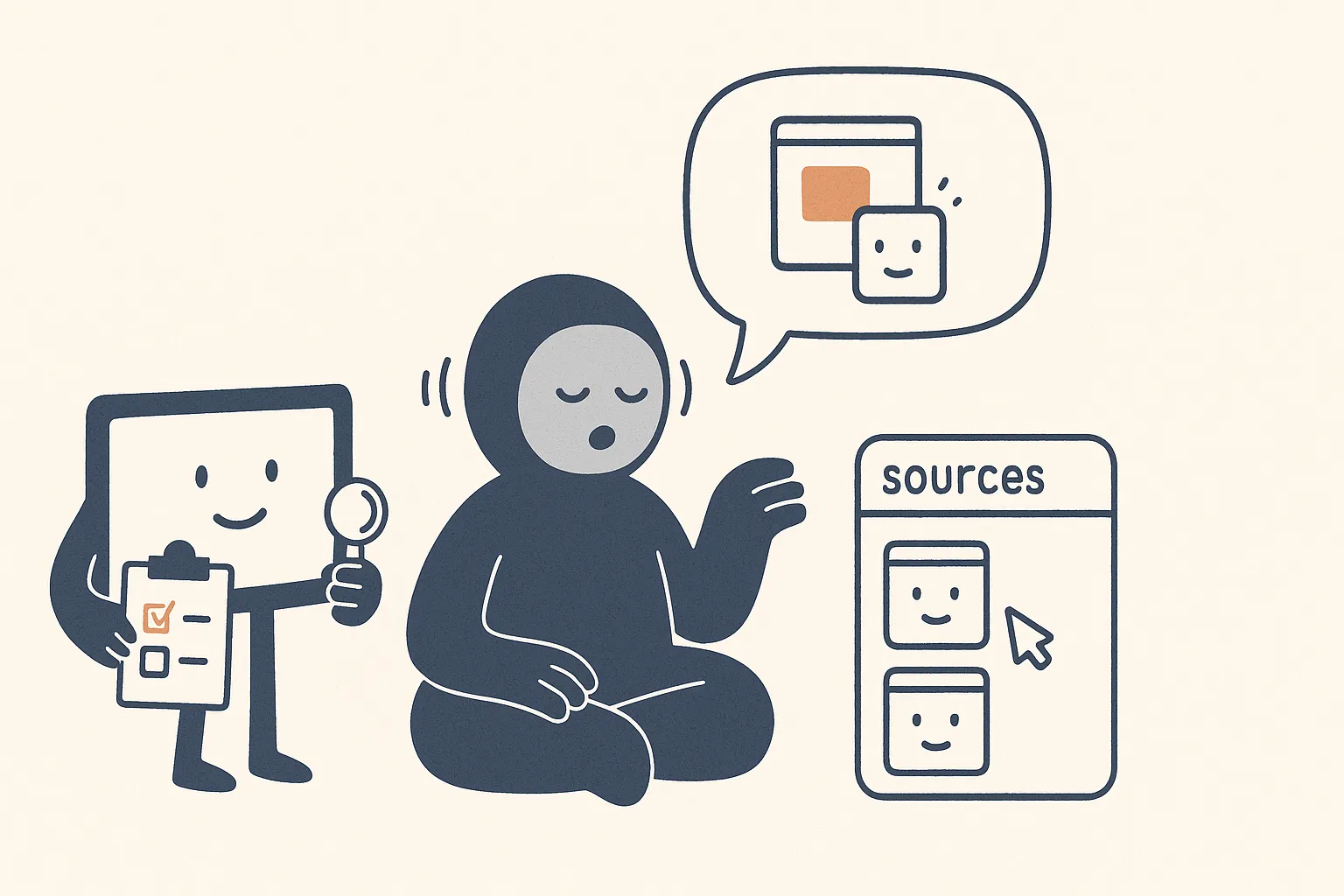
Scrunch AI is an AI-visibility, or AI-search-monitoring, platform, and one of the more specialised SEO tools in a modern stack. It tracks whether your brand shows up in the answers that ChatGPT, Google AI Overviews, and other models give to the questions your buyers ask, whether you are named in those answers or merely cited underneath them, which competitors get named instead, and which sources the answer was built from. It is a rank tracker for the AI era, except the thing it watches is not your position on a page, it is whether you exist in the answer at all.
Here is the verdict up front, because you came for one. Scrunch is worth it if you are serious about generative engine optimization and you will act on what it shows you. But the tool is not the moat, and the dashboard is not the work. The work is the prompt library you point it at, and most of this review is about getting that right, because that is the part that actually decides whether the tool is worth anything to you.
If you want the measurement run by a person against a dated prompt set, that is my AI visibility audit.
What Scrunch tracks: named versus cited, per prompt, across every AI platform
The core job is answering a few questions on a schedule, at the level of each individual prompt:
- Are you named, or just cited? A model can pull from a listicle that happens to mention you and still name three competitors as the recommendation. Scrunch reports named-versus-cited down to the specific prompt, so you see whether you were the answer or a footnote. That is the whole difference between a citation and a mention, measured per query.
- Visibility versus citation. It splits the two, and this matters more than it sounds. Being visible and named in the answer is what counts. A citation is worthless if your brand is not the thing the reader actually walks away with. We already know this, but it is good to see it separated in the data.
- Who gets named in your place, and from where. It shows the competitors the model recommends and the sources it synthesized, so you know both the share you are losing and where the off-site work has to happen.
It tracks essentially every AI platform: ChatGPT, Google AI Overviews, Gemini, Claude, Perplexity, Grok, even Meta. You choose which ones to watch, and you should. I only track the platforms my buyers actually use. If your audience is not on Grok, do not waste a tracked prompt watching it. Scrunch runs each prompt roughly every other day and logs the response, so you get a real trend over time, and I keep the whole set deliberately bottom-of-funnel.
How to build your Scrunch prompt library
This is the part that makes or breaks the tool, and it is the first thing I do on a new account after we have identified the target money keywords. The prompt library is not a keyword list. It is a deliberate map of every way a real buyer might ask an AI tool about the problem you solve. I build it from a combination of sources:
- Start from your money keywords. The bottom-of-funnel commercial terms you already locked in seed the prompts closest to a decision.
- Add the products, use cases, and terms the client wants watched. Every account has specific products and use cases they want to know people are looking for. Layer those in, because a generic keyword list will miss them.
- Turn persona pain points and jobs-to-be-done into prompts. For each buyer persona, take their actual pain points and the jobs they are trying to get done, and phrase them the way that person would type them into ChatGPT. Those persona questions become your long-tail prompts.
- Keep it bottom-of-funnel and buyer-real. Favor the decision-stage questions a real buyer asks, and pick the platforms they actually use.
- Cap the set: cover everything once, then stop. This is the trap people fall into. They build way too many prompts, and then it is impossible to show growth on any of them, impossible to optimize for them, and eventually you are staring at a list where you do not even know what half of them are for.
You are only as good as the prompts you track. Not the most prompts. The right ones.
The goal is a healthy, bounded set: enough to cover your entire range of personas, use cases, and product portfolio, and not one prompt more. On one HR-tech account I grew the tracked set from 139 to 200 prompts, and it worked because every addition was deliberate, the CFO-ready ROI questions, the manager-enablement queries, the high-intent industry cuts, the competitive “vs” terms, the “alternatives to [competitor]” switcher wedge, the modern-integration questions. That is expansion with a reason. Doubling a list just to make the number bigger is how you end up managing noise.
How I read Scrunch and tie it to pipeline
Once the library is right, the reading is simple: watch named-versus-cited move over time, per prompt and in aggregate, note which competitors are taking the answers you want, and see which sources the models keep pulling from. Then tie the movement back to influenced pipeline the way I do with everything else worth measuring. A brand-mention trend that never connects to a demo or an opportunity is just another vanity chart. The point of tracking named-versus-cited on real buying prompts is that it is a leading indicator for the pipeline that shows up later.
What Scrunch showed me: your own site is a sliver of what AI cites
The most useful thing this kind of tracking ever told me was uncomfortable. I pulled the citation export across six B2B SaaS accounts, every domain an AI answer cited across a large tracked prompt set, and aggregated it. Of all the sources cited about a brand’s own category, the brand’s own website was about 2.6%. Third-party sites were roughly 88.7%, and competitor domains about 8.7%. On average a company’s own site was only the 3.7th most-cited source about its own category, and in the cybersecurity account it ranked ninth.
You cannot see that without a tool pointed at the right prompts, and you cannot fix it by editing your own pages, because your own pages are 2.6% of the input. That single readout reframes the whole job as off-site, which is the argument I make in full in the GEO statistics data drop and in off-page SEO. Scrunch is how I check it for a specific account.
Where Scrunch falls short: the honest gripes
This category has real downsides.
The suggestions are not useful. Scrunch will try to hand you little lists of things to do to improve your showing, and honestly, I have not found them worth much. The value is in the raw named-versus-cited data and the sources. That part you still bring yourself.
You add competitors manually, and the labeling gets messy. You enter your competitors by hand, which means you can only track so many, and in a crowded category that is a real ceiling. The knock-on effect is that things get labeled third-party when they are really competitors you did not or could not add. It is partly a byproduct of industries that have dozens upon dozens of competitors, but it means you should read the third-party share with a little skepticism.
The big one, and it is not Scrunch’s fault: there is no volume data on prompts. Every AI platform has this limitation right now. We have no real search volume around these prompts. None of the platforms expose how often a given question is actually asked. That is a serious gap, because without volume you are optimizing for questions you cannot confirm anyone is asking.
My workaround, and my honest sequencing, is this. I tie prompts back to real keywords wherever I can, so I am anchored to demand I can actually verify. And I usually gear prompt-level optimization toward a bit later in the strategy, because I would rather first optimize for keywords I know people are searching for. There is almost always lower-hanging fruit than chasing prompts with no confirmable demand behind them. I am not saying I do not use Scrunch, and I am not saying it does not work, we have seen real results from it. I am saying that until these companies expose volume, probably when they start selling ads inside their platforms, prompt tracking is a powerful but partially blind instrument, and you should treat it that way.
Optimizing prompts with no volume data is optimizing in the dark. Tie them to keywords you can verify, and you at least have a candle.
Is Scrunch AI worth it? Who it is for and who it is not
Worth it, with a condition. Scrunch AI pricing sits in the premium, team-plan range, so it is for teams that treat being named in AI answers as a real channel, will build a disciplined prompt library, and will act on the readout: run digital PR toward the sources that feed the answers, and report the movement as pipeline.
| Scrunch is for you if | Skip it (for now) if |
|---|---|
| You treat being named in AI answers as a real channel | You want a set-and-forget score to glance at |
| You will build and maintain a disciplined prompt library | You have not done the keyword-level work yet |
| You will act on the readout and report it as pipeline | You are early: GSC’s AI report and manual prompt checks are free |
It is not for a team that wants a set-and-forget score, and it is not the place to start if you have not done the keyword-level work yet. If you are earlier than that, Google Search Console’s AI-impression report and a handful of manual prompt checks in ChatGPT will tell you roughly where you stand for free. Graduate to a tracker when you are ready to manage the number and your prompt library is built with intent.
Scrunch AI vs Profound: the honest positioning
I will not fake a head-to-head I have not earned. I run Scrunch. Profound is the other serious tool people put in the same category, and it is the main alternative you will weigh, but I have not spent enough hands-on time in it to give you a fair feature-by-feature verdict, and you should distrust anyone who claims a confident one with little hands-on time. What I can tell you is that the category matters more than the logo. Both are trying to answer the same question, are you the named answer for the prompts your buyers ask, and the differentiator in your results will be your prompt library and your off-site work far more than the specific tool. Pick one, point it at real buying questions, and act on it.
Scrunch AI FAQ
What is the Scrunch tool?
Scrunch is an AI-visibility, or AI-search-monitoring, platform: it tracks whether your brand gets named and cited in the answers ChatGPT, Google AI Overviews, Gemini, Claude, Perplexity, and other models give to your buyers’ questions. Think of it as a rank tracker for the AI era, except the thing it watches is not your position on a page, it is whether you exist in the answer at all. The tool is only as good as the prompt library you point it at, which is where the real work sits.
Is Scrunch AI a legitimate company?
Yes. Scrunch AI is a real, established company in the AI-visibility monitoring space, and I run it on live B2B SaaS accounts, so this is not a review from the outside looking in. The more useful question than “is it legit” is “will you use it well,” because the platform only pays off if someone builds a disciplined prompt library and acts on what it shows. It is a real tool; whether it is worth the premium price depends on that.
How do you build a prompt library for AI-visibility tracking?
Build it from four sources, then cap it. Start with your money keywords, add the specific products and use cases the client wants watched, and turn each buyer persona’s pain points and jobs-to-be-done into prompts phrased the way that person would actually ask an AI tool. Keep everything bottom-of-funnel and buyer-real. Then stop once you have covered the full range of personas, use cases, and products, because tracking too many prompts makes it impossible to show growth, optimize, or even remember what each one is for. You are only as good as the prompts you track.
Which AI platforms does Scrunch track?
Scrunch tracks essentially all of them: ChatGPT, Google AI Overviews, Gemini, Claude, Perplexity, Grok, and Meta, and you choose which to watch. It runs each prompt roughly every other day and logs the response so you get a trend. Track the platforms your buyers actually use and skip the rest.
Does Scrunch track citation quality or just citation frequency?
Both, and the split it draws is more useful than a raw count. The citation report tallies how often you get cited and separates being named in the answer from being a buried citation underneath it, per prompt, and shows which competitors got named and which sources the model synthesized. That named-versus-cited read is the quality signal that matters, because a citation the reader never walks away with is worth little. What you do not get is a link-style authority grade on each source, so treat “quality” here as whether you were the answer.
What is the Scrunch AI citation report?
The Scrunch citation report is the readout of where AI answers pull from when they respond to your tracked prompts: which sources the model synthesized, which competitors got named, and whether your brand was named in the answer or just cited underneath it, per prompt and across each AI platform you watch. It runs on a schedule, roughly every other day per prompt, so you get a trend over time. The signal that matters most in it is named-versus-cited, because readers remember the answer and skip the footnotes.
How much does Scrunch AI cost?
Pricing for AI-visibility tools in this category is generally quote-based and changes, so pull the current plans from the vendor directly. The more useful framing: the cost that matters is not the subscription, it is whether you have someone who will build a disciplined prompt library and act on the output. A tracker you look at and ignore is expensive at any price.
What are the best Scrunch AI alternatives?
Profound is the alternative most teams weigh against Scrunch in the AI-visibility-tracking category, with Quattr another name that comes up in the same evaluation. Beyond a dedicated tracker, the free starting point is Google Search Console’s Generative AI performance report plus manual prompt checks in ChatGPT, Perplexity, and Google AI Overviews. For how these fit alongside the rest of a real stack, see the AI SEO tools I actually use and the SEMrush vs Ahrefs breakdown.
What changed
- September 29, 2026: Tightened the writing throughout and linked the related service page.