SEO Automation: How Claude Helps Me Run Five SaaS Accounts
SEO automation is not set-and-forget. What I automate with Claude across five B2B SaaS accounts, what I never automate, and the stack that makes it work.
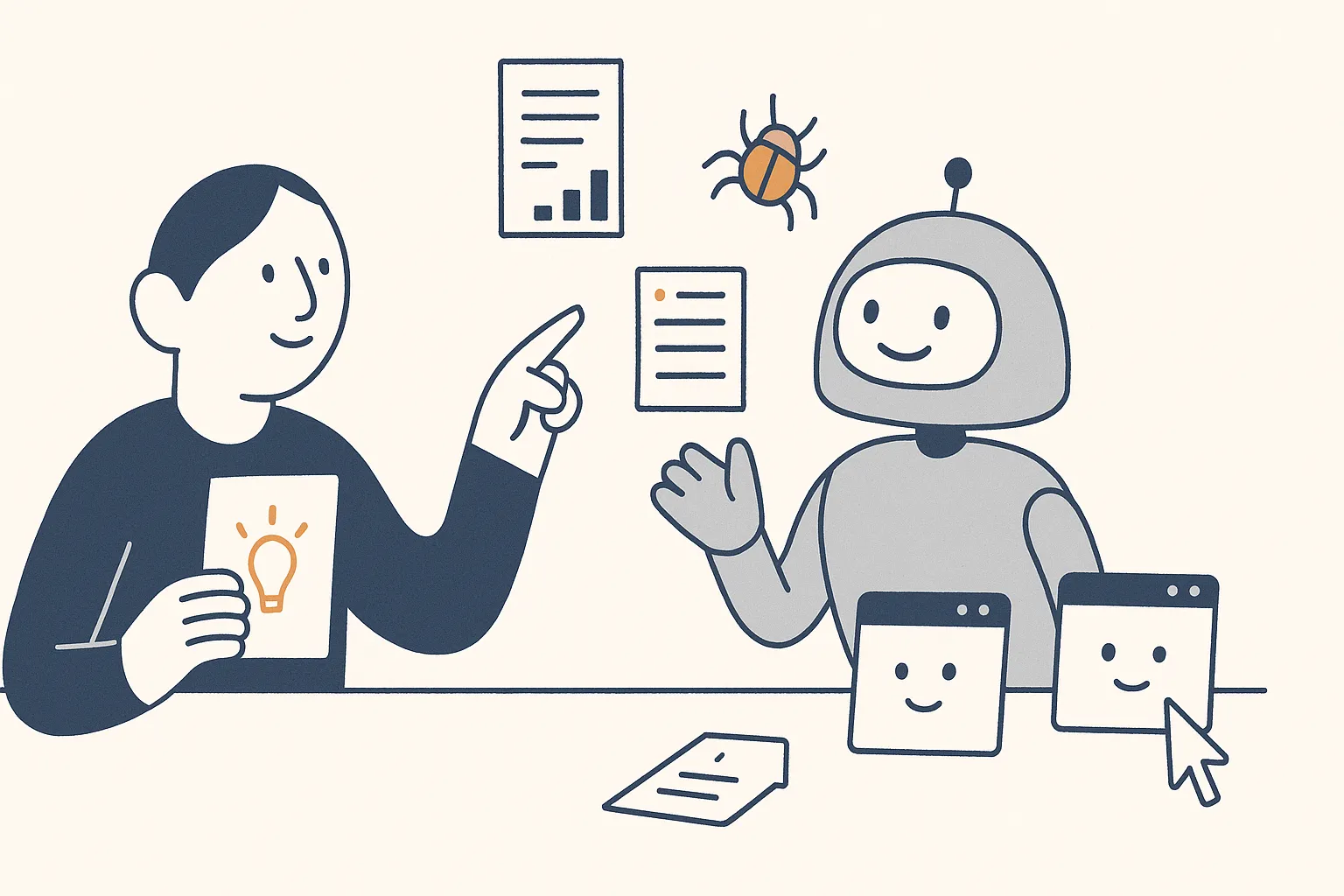
SEO automation in practice: automate the busywork
SEO automation is using software, and now AI, to do the repetitive parts of SEO for you, the most practical corner of AI marketing, so your time goes to the parts that actually need a human. That is the whole framing, and it is where most of the “automate your entire SEO” pitches get it wrong. You do not automate SEO. You automate the mechanical 80% of it, the audits, the data pulls, the clustering, the reporting, and you spend the time you win back on the 20% that decides whether you rank: strategy, judgment, and original writing.
I run SEO for five B2B SaaS accounts, and I could not do it at that scale without leaning on Claude hard. But Claude helps me do the work; it does not do it for me. Everything I hand off is deliberately the same kind of task: high-volume, rules-based, and boring. And even those are not fully hands-off, because AI does the grunt work while I still make the calls it cannot. The rest of this piece is where I draw that line, task by task.
Automate the work that is repetitive and rules-based. Keep the work that requires a point of view. The whole skill is knowing which is which.
Building these workflows for in-house teams is what I do as an AI SEO consultant.
The stack: Claude plus your data through MCP
The setup is simpler than people expect. One reasoning engine in the middle, with your data piped into it. For me that engine is Claude, because the work is data-heavy and Claude holds a large pile of mixed data without losing the plot, which is why I use it for SEO over the alternatives.
What makes it powerful is not the model alone, it is connecting your real data to it. Through MCP (the protocol that lets tools feed a model directly), I plug in live keyword data from the Ahrefs MCP, technical crawl data from Screaming Frog’s MCP server, Search Console performance data, and analytics. Now the model is not guessing from training data; it is reasoning over this site’s actual keywords, this crawl’s actual errors, this week’s actual GSC numbers. That is the difference between a chatbot and an operator. The data lands in one place, and the model works across all of it at once.
The SEO automation tool landscape
“SEO automation tools” usually means one of two layers, and you want both. The plumbing layer is workflow automation, tools like n8n, Zapier, and Make that move data between systems on a trigger: pull a Search Console export on a schedule, fire a Slack alert when rankings drop, sync a keyword list into a sheet. n8n is the one worth learning if you are technical, because it is open-source, self-hostable, and free to run, which makes it the closest thing to a genuinely free SEO automation tool with no ceiling, and it connects to almost anything. The intelligence layer is the AI, Claude or ChatGPT through MCP, which does the reading and reasoning the plumbing hands it: cluster the export, flag the cannibalization, draft the brief. Most of what people call SEO automation is wiring a workflow tool to an AI model and pointing it at your data. The tools are cheap and increasingly free; the skill, as the next section covers, is knowing which tasks are actually safe to hand over.
What I automate, and where I still have to step in
Here is the honest version, messier than “automate the busywork.” Almost none of these tasks are fully hands-off. AI does the heavy lifting and I make the judgment calls it cannot, and the line falls in a different place for each one.
| Task | What AI does | Where I still step in |
|---|---|---|
| Content audits | Scores every page keep / improve / consolidate / kill | The close cuts between similar pages; keeping one for a reason the data can’t see |
| Keyword clustering | Groups hundreds of queries into topics fast | Intent traps: which synonym, terms we skip, low-volume terms that matter here |
| Striking-distance | Surfaces positions 5-20 worth a push | Almost nothing, this one I hand over |
| Data pulls / reporting | Formats and charts the numbers | The interpretation: which movement matters, and why |
| Brief generation | Drafts the outline and headings | Fixing the targeting, adding the angle and first-party proof |
Content audits. AI scores the site page by page: I built an audit that graded roughly 929 pages into keep, improve, consolidate, and kill. But the close calls stay mine. When two similar articles pull nearly the same traffic and conversions, deciding which to keep, which to redirect, and which to cut is a judgment the stats alone do not settle. And sometimes I keep an underperforming page because I know something the data does not, a reason tied to the client or the industry that never shows up in a metric. AI gets me to the shortlist; I make the cuts.
Keyword clustering. AI is fast at grouping hundreds of queries into topics, and I lean on it for that. But it walks straight into intent traps. It sees volume and difficulty and does not always know what to do with them. It will not know which of two synonyms to target, or that we deliberately do not chase a term because the client does not offer that thing, or that a lower-volume term matters more here because of the client’s authority, the site’s age, and what we are prioritizing this quarter. So I let it cluster, then I correct it against everything about the client that no keyword tool contains.
Striking-distance finding. This one I hand over almost completely, because it is pure time-saving. Surfacing the queries sitting at positions 5 to 20 where a small push wins is something a human can do but should not spend hours on. Point AI at the data, get the list back, move on.
Pulling data together. AI speeds up the grunt work behind a report: pulling numbers from different tools and getting them into clean, readable shape. Send Claude a spreadsheet and it formats and charts it in a way that used to need someone strong in Excel, and Looker Studio is still my default for the standing dashboards. But that is data prep. The report, the part that matters, is the interpretation: which movement matters for this client, why one dip is fine and another is a problem. That is entirely mine, and it is what a client is paying for. AI helps me get to the analysis faster; it does not do the analysis.
Brief generation. AI is a fast route to a structured content brief, the outline, the headings, the formatting, and it saves real time there. But left alone it is often wrong about what to target and how to build the page, and its brief is generic by default. So I use it for the scaffold and do the real work on top: fixing the targeting and adding the angle and first-party information that make the eventual page different. The brief AI hands you is a starting point.
What not to automate: strategy, POV, and the writing
This is the half nobody selling “full SEO automation” wants to talk about. The work that decides whether you actually rank is exactly the work you cannot automate.
Strategy stays human: which topics to own, which intent to chase, how to position against a competitor, when a traffic drop is seasonal versus structural. So does point of view. And most of all, the writing stays human, because the entire ranking game now runs on Information Gain: the page that wins is the one adding something the model does not already have. A fully AI-written page is, by definition, a recombination of what already exists, so its Information Gain is zero and it deserves to lose. You can automate everything about a page except the reason it deserves to rank.
So I use AI to get to the blank page faster, and I fill it myself. It handles the research, the outline, the data wrangling, and then a human adds the first-party proof, the argument, and the voice. Automate the runway; do not automate the takeoff.
Will AI replace SEO?
Not in the near term, but it replaces a lot of the tasks SEO used to be. The parts that were manual and mechanical, the audits, the pulls, the reports, are getting automated away, and that is good. What is left is the judgment: strategy, positioning, and creating genuinely new information, which is the part AI cannot do for you because it is the part AI itself is hungry for. The SEO who leans into automation for the busywork and spends the reclaimed time on strategy and original content does not get replaced. They get faster, and they cover more ground. The one who was only doing the mechanical work is the one who should be worried. I answer this one properly, profession and five-years-out and all, in will AI replace SEO.
FAQ
What is automation in SEO?
SEO automation is using software and AI to handle repetitive, data-driven SEO tasks, content audits, keyword clustering, rank and performance reporting, technical crawls, so your time goes to strategy and content instead. The goal is not to remove the human; it is to remove the busywork. The judgment-heavy parts, strategy and original writing, stay manual because they are what actually move rankings.
What are the best SEO automation tools?
The best SEO automation tools are a pairing: a workflow layer (n8n, Zapier, or Make) to move data on a trigger, and an AI layer (Claude or ChatGPT through MCP) to read and reason over it. n8n is the standout on the plumbing side because it is open-source and free to self-host; Claude is the one I lean on for the reasoning because it holds a lot of tool data at once. Skip the all-in-one “AI SEO platforms” that promise to automate strategy, because the judgment is exactly the part you should not hand over.
Will SEO be replaced by AI?
No, but the job changes. AI is automating the mechanical parts of SEO, the audits, data pulls, and reports, and that work is going away. What remains is the human judgment: strategy, positioning, and creating genuinely new information. Because AI systems reward content that adds something they do not already have, the original-thinking part of SEO becomes more valuable. SEOs who automate the busywork and focus there get faster; those who only did the busywork are the ones at risk.
Can I do SEO by myself?
Yes, more than ever, because automation collapses what used to take a team into one person plus AI. Connect a capable model to your keyword, crawl, and analytics data, automate the repetitive work like reporting and auditing, and spend the reclaimed time on strategy and writing. I run five B2B SaaS accounts this way. You do not need to code; you need the right setup and a clear line between what to automate and what to keep human.
What SEO tasks should you not automate?
Strategy, point of view, and the actual writing. Deciding which topics to own, how to position, and when a change in traffic is seasonal versus structural all require judgment a model should not make for you. And the writing has to stay human because ranking now depends on Information Gain, the new information a page adds, and a fully AI-written page adds nothing the model did not already have. Automate the research and prep around the page, and write the substance yourself.
Do you need to code to automate SEO?
No. Modern setups connect your existing tools, keyword platforms, crawlers, Search Console, analytics, to an AI model through integrations like MCP, without you writing code. The skill is not engineering; it is knowing which tasks are safe to automate (the repetitive, data-driven ones) and which to protect (strategy and original content), then wiring your data into one place a model can reason over.
What changed
- September 29, 2026: Tightened the writing throughout and linked the related service page.